Bird Survey - 2024 & 2025
Kimiākau/ Lower Shotover River Braided River
Full survey available here
The Lower Kimiākau/ Shotover River traverses through landscape that offers both protection and pressure on the habitat of migratory braided river birds.
Braided rivers are dynamic environments, they are classified as globally rare, and naturally uncommon ecosystems in New Zealand that are threatened (endangered) because of weed infestations that impact more than 80 percent of their existing extent.
Five species are known to nest on the Lower Kimiākau/ Shotover River (“the River”) and Delta: black-fronted tern, banded dotterel, black-billed gull, South Island pied oystercatcher (SIPO), and pied stilt.
Many of the threats impacting on local braided river birds are common to braided river habitats throughout Otago and Canterbury. These are discussed in Sections 4, 6, and 7 of the survey.
Nesting habitat along the River and Delta is limited by the number of beaches high enough to stay above seasonal high river flows and the availability of terraces and short spring, turfy grasslands that are open and relatively free of weeds. The survey's section 3, 4 and 6 discuss the dynamic nature of the river environment, the wildlife present, and the impacts (both positive and negative) on the available habitats.
Three braided river bird surveys were undertaken in early December 2021, 2024, and 2025 to determine the location of breeding tern and gull colonies and obtain a count of dotterels, oystercatchers and stilts.
The Tucker Beach Wildlife Management Reserve (TBWMR) recorded the highest counts for braided river species during the 3rd December 2024 and 4th December 2025 surveys.
The Wakatipu High School site was added to the 2025 survey as it has been used as a post-breeding, pre-migration staging site by SIPO for the past few years.
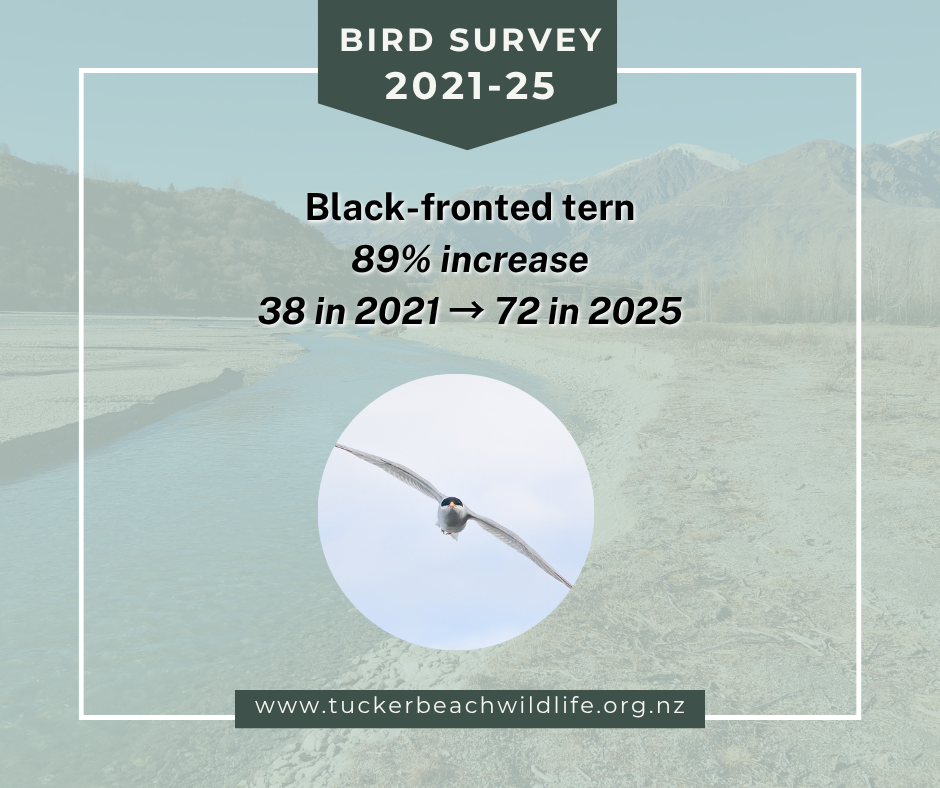
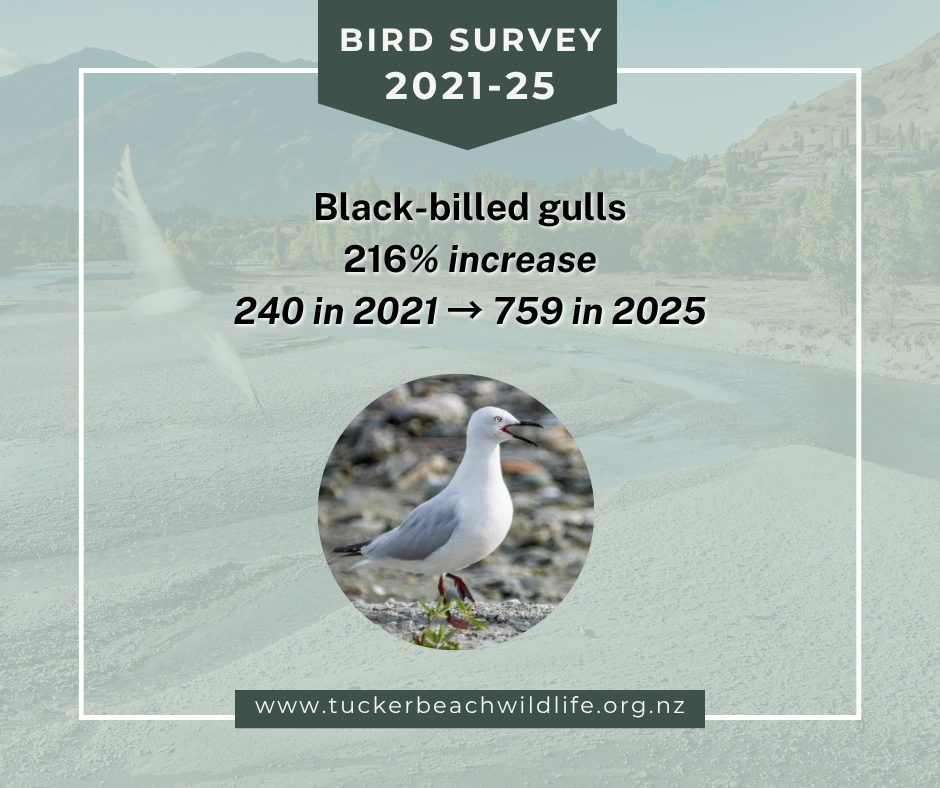
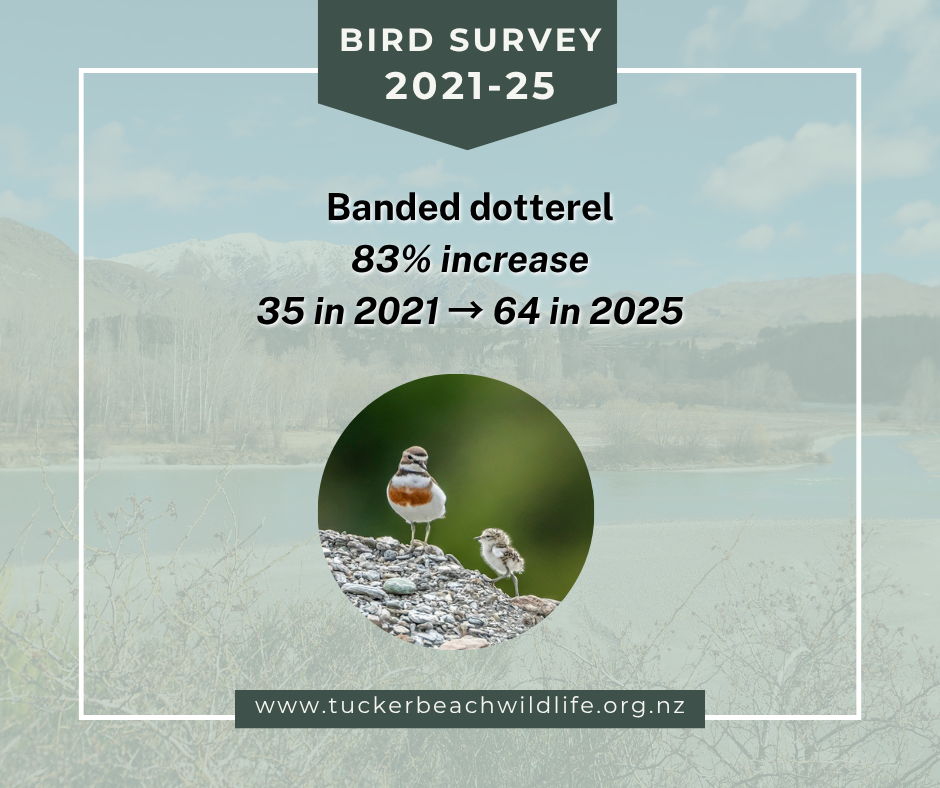
The results of the surveys suggest that local populations are stable or increasing. The count of black-fronted terns increased 89 % from 38 in 2021 to 72 2025; black-billed gulls increased 216 % from 240 in 2021 to 759 in 2025 and banded dotterel increased nearly 83% from 35 in 2021 to 64 in 2025 despite a dip to 24 in the 2024 count. Results are discussed in Sections 5 and 6. Tables 1A to 1C and Charts in Appendices 1 and 3 contain detailed results for all river sections and land-based count stations.
The surveys represent a snapshot count undertaken by volunteers with varying levels of experience. Counts may have been influenced by recent weather events, ground and river conditions as well as land management and river or land-based activities.
Recommendations for continuing management of braided river bird habitat are provided in Section 8 of the survey.
The Tucker Beach Wildlife Trust (TBWT) would like to acknowledge the support of many organisations and volunteers, and we refer you to the survey's Section 9 to gain an understanding of the level of collaboration and support for the goals of the TBWT and their partners.
We would like to thank Shotover Jet and Real NZ/ Queenstown Rafting for providing safe transport down the river for these surveys.